








Full Service
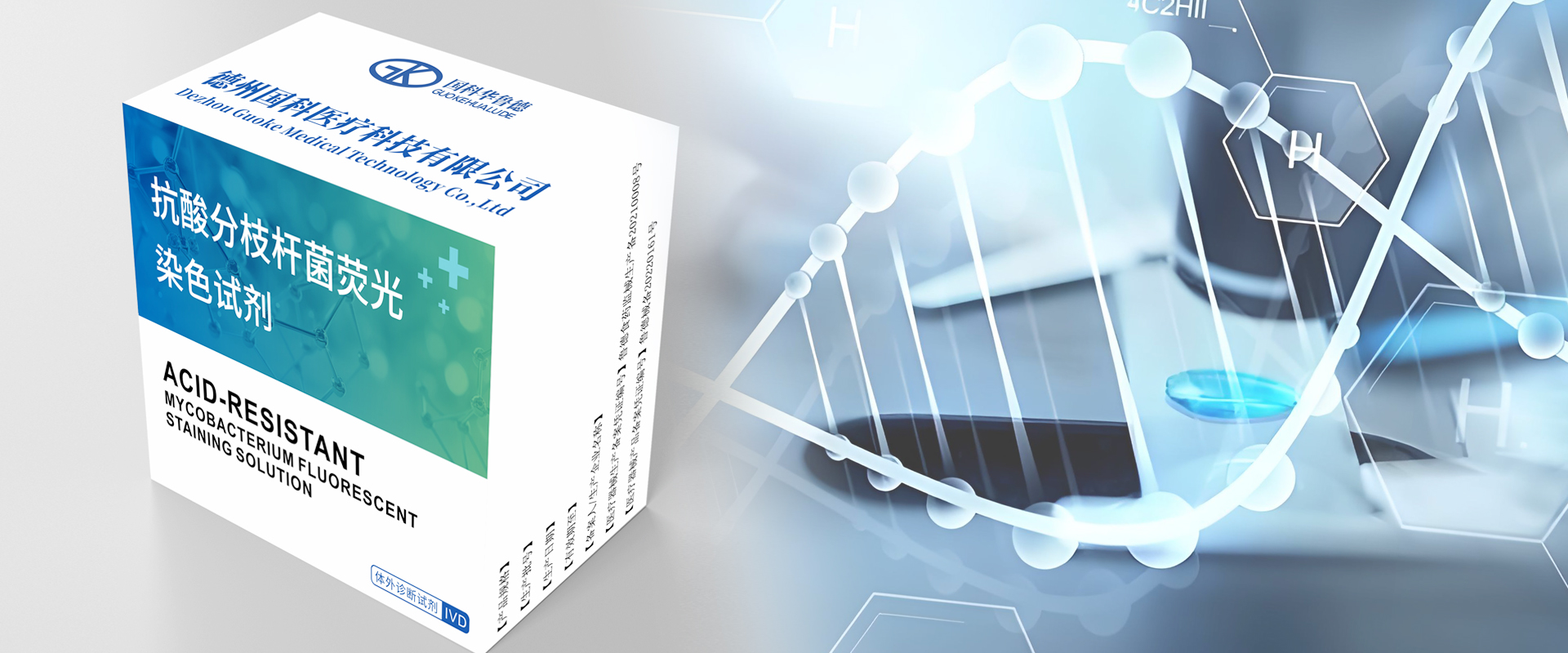
Hello everyone, today I'm going to introduce Acid-resistant Mycobacterium Fluorescent Staining Solution.
Mycobacterium tuberculosis is a pathogenic bacterium that causes pulmonary tuberculosis and extrapulmonary infections. Tuberculosis is currently the leading cause of death from infectious diseases worldwide. Mycobacterium tuberculosis infection is highly pathogenic and difficult to diagnose early. Therefore, a rapid and accurate diagnostic method is urgently needed in clinical practice for disease control and patient treatment.
Let's first learn about the characteristics of mycobacteria.The cell walls of mycobacteria contain a large amount of lipids, mainly mycolic acid, which are very difficult to stain. Once the mycolic acid in mycobacteria binds to the dye, it is very difficult to decolorize with acidic decolorizing agents. Traditional Acid Fast Stain (Ziehl-Neelsen) uses this staining principle. But staining requires heating and prolonged staining time.
A new type of staining reagent which I want to introduce today is BanyanRR® Acid-resistant Mycobacterium Fluorescent Staining Solution. The staining principle is that, the auramine "O" dye in the reagent can label the antibody. At room temperature, the antibody can bind to the corresponding antigen of the cell wall of acid-fast mycobacteria in the sample, and then present specific fluorescence imaging under the B band excitation light of a fluorescence microscope.
Compared to traditional acid-fast staining (Ziehl-Neelsen), fluorescence staining can significantly improve the detection rate of specimens with low bacterial counts. Acid-fast mycobacteria exhibit golden-yellow fluorescence, which is highly sensitive; and the process does not require heating. Acid-fast mycobacteria are easily detected under low magnification, allowing for rapid
slide reading and facilitating batch testing.
Let's look at the comparison images of the two methods. Fluorescent staining provides clear and visible images with high sensitivity and high background contrast, which helps improve the positive detection rate. Traditional acid-fast staining has poor staining effect and is difficult to detect when the number of acid-fast bacteria in the sample is very small, with unclear background contrast.
Now you should understand the advantages of Acid-resistant Mycobacterium Fluorescent Staining Solution. In the next video, we'll learn about the operating procedure.